
Dope-dyed, top-dyed, yarn-dyed, piece-dyed: when the color goes in
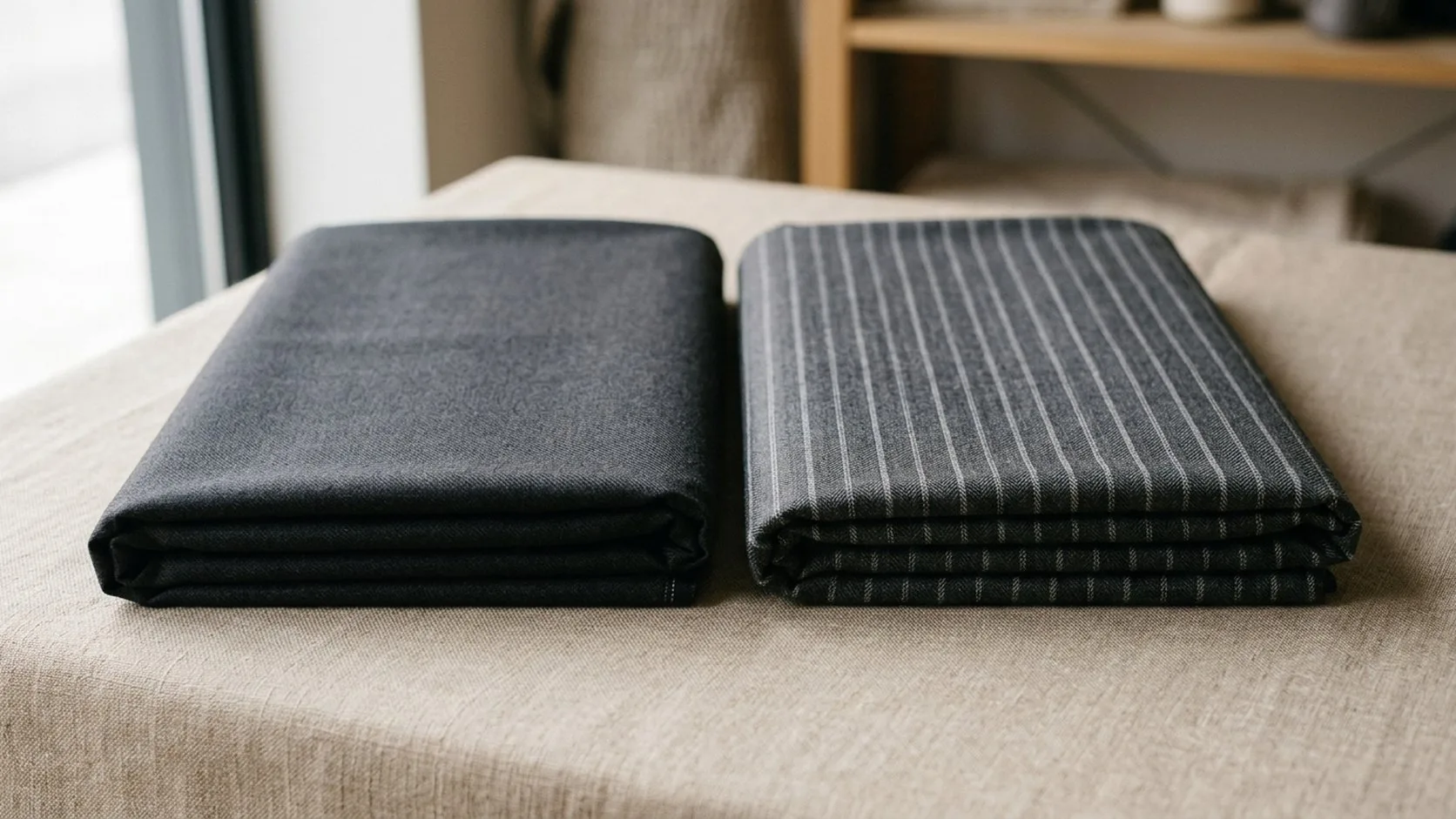
Every suiting fabric gets its color at one of four points in production: in the fiber before it exists, in the fiber before it is spun, in the yarn before it is woven, or in the finished cloth. The four terms for those points (dope-dyed, top-dyed, yarn-dyed and piece-dyed) describe not what the cloth is made of, but when the color goes in. That timing decides whether a fabric can carry a woven-in pattern, how closely the shade matches from one order to the next, and how well the color holds up in wear. Here is what each term means, which ones our range uses, and how to choose.
Dope-dyed: color added before the fiber exists
Polyester and rayon are both man-made fibers, formed from a liquid: polyester from molten polymer, rayon (viscose) from a cellulose spinning solution. In the trade that liquid is called the "dope". In dope-dyeing, the pigment is mixed into it before the fiber is spun, so the color is part of the fiber from the moment it forms and runs through its whole cross-section instead of sitting on the surface. The same process is also called spun-dyed or mass-colored.
This is how the polyester and rayon in our blends are colored. The colored fibers are blended and spun into yarn, and the yarn is woven into cloth that never goes into a dye bath. (In Chinese the product is known as 色纺, "spun from colored fiber".) Three things follow for the buyer:
- Colorfastness. The color is inside the fiber, so there is very little on the surface to wash out, rub off or fade. That is why dope-dyed polyester is a common choice for uniform cloth that gets laundered hard.
- The same shade on every re-order. The shade is fixed by the pigment recipe when the fiber is made, not by a dye bath, so one lot matches the next closely.
- Less water. With no dyeing step on the yarn or the cloth, the process uses far less water, and produces far less wastewater, than conventional dyeing.
Patterns are still possible. Fibers in different colors can be blended for a mélange or heathered look, and yarns spun in different colors can be laid into the warp in a stripe sequence, exactly as our how suiting fabric is made guide describes. Our pinstripes and micro-patterns are built this way. The tradeoff is the palette: because the color is set when the fiber is made, stock articles come in the shades the fiber is produced in, and an entirely new shade typically needs its own fiber run, which means a larger order and a longer lead time.
Top-dyed: wool dyed as combed fiber, before spinning
Wool cannot be dope-dyed, because it is grown rather than formed from a liquid. The earliest point it can take color is as "top": the rope-like sliver of long, parallel fibers left after the wool has been scoured, carded and combed for worsted spinning. In top-dyeing, that sliver is dyed, then combed again to even out the color, and only then spun into yarn. In Chinese this is 条染; 条 is the top itself.
This is how our 100% worsted wool is colored. Dyeing loose combed fiber, rather than tightly twisted yarn or dense cloth, lets the dye reach every fiber evenly, and the combing after dyeing blends out small differences. The result is an even, deep color, which is why top-dyeing is standard practice in fine worsted suiting. As with dope-dyed fiber, tops in different shades can be blended for a mélange, and the spun yarns can be woven into stripes and checks.
Yarn-dyed: spun yarn dyed before weaving
Yarn-dyed fabric takes its color one step later. The fiber is first spun into undyed yarn; the yarn is then dyed on cones or in skeins, and the dyed yarn is wound onto the beam in the stripe or check sequence the cloth needs. It is the classic route for shirting, and plenty of mills use it for patterned suiting.
We do not use it for our range, but the term is often applied loosely to fabric like ours, so it is worth being precise. On a spec sheet, "yarn-dyed" tells you the color was put into finished yarn in a dye bath. Dope-dyed and top-dyed cloth look much the same on the loom, because the yarn arrives already colored, but their color went in earlier, at the fiber stage. Yarn-dyeing also has its own source of variation: every dye lot of cones has to be matched to the one before, so slightly more shade difference between batches is normal for it.
Piece-dyed: the whole cloth is dyed after weaving
Piece-dyed fabric is the last of the four. It is woven from undyed (greige) yarn, and only then is the finished cloth (the whole "piece") dyed as one continuous roll. For a poly-rayon blend that means two classes of dye: disperse dye for the polyester and a separate class for the rayon. The loom never sees color, so piece-dyed cloth is always a solid shade; many solid twills and gabardines are made this way.
Its strength is flexibility. Almost any solid shade can be matched on greige cloth, in smaller quantities than a new fiber color would need, which makes piece-dyeing the usual route to a custom solid color. Its limits are that it can only ever be solid, and that the color goes into the fiber from the outside, so wash and light fastness depend on the dyes and the dyeing rather than being built into the fiber. Piece-dyed articles are made to order.
How to choose
- Uniforms and workwear that get washed often: dope-dyed. Colorfastness and a shade that repeats across re-orders matter more here than an unusual color.
- Patterned suiting (pinstripes, checks, micro-patterns, mélanges): dope-dyed for poly-rayon, top-dyed for wool. Piece-dyed cloth cannot carry a woven-in pattern.
- Fine wool suiting: top-dyed worsted.
- A solid color outside the stock range: piece-dyed is usually the quickest route to a custom shade.
- Weight and hand still matter separately. The dyeing method does not replace the other specifications on an order. See our fabric weight (GSM) guide for how weight interacts with composition and finishing.
The four methods at a glance
| Aspect | Dope-dyed | Top-dyed | Yarn-dyed | Piece-dyed |
|---|---|---|---|---|
| When the color goes in | Into the liquid polymer or spinning solution, before the fiber forms | Into combed wool top, before spinning | Into spun yarn, before weaving | Into the woven cloth, after weaving |
| Fibers | Man-made: polyester, rayon | Wool | Any | Any |
| Woven-in patterns | Yes | Yes | Yes | No, solid colors only |
| Colorfastness | Very high: the color runs through the fiber | High: even, deep dye penetration | Depends on the dyes and dyeing | Depends on the dyes and dyeing |
| Shade match between re-orders | Very close: set by the pigment recipe | Close: tops are re-combed after dyeing | Some variation between yarn dye lots | Matched to a standard for each dye lot |
| A new custom shade | Needs a new fiber run | Needs a new top-dyeing run | Needs a new yarn-dyeing run | Easiest of the four |
| In our range | Polyester–rayon blends | 100% worsted wool | Not used | Made to order |
Key takeaways
- The four terms name four points in production: before the fiber forms (dope-dyed), before wool is spun (top-dyed), before yarn is woven (yarn-dyed), and after the cloth is woven (piece-dyed).
- Our polyester–rayon blends are dope-dyed: the color is added while the fiber is still liquid, which gives strong colorfastness, the same shade from lot to lot, and far less water use.
- Our worsted wool is top-dyed: dyed as combed fiber before spinning, for an even, deep color.
- Yarn-dyed means the color was put into finished yarn. We do not use it, and it is not an accurate label for dope-dyed or top-dyed cloth.
- Piece-dyed cloth is solid-only, but it is the most flexible route to a custom shade.
Know which one you need? Browse the catalog (filter by dyeing method to see composition, weight and width for each article) or send your specification and we'll quote within one business day.